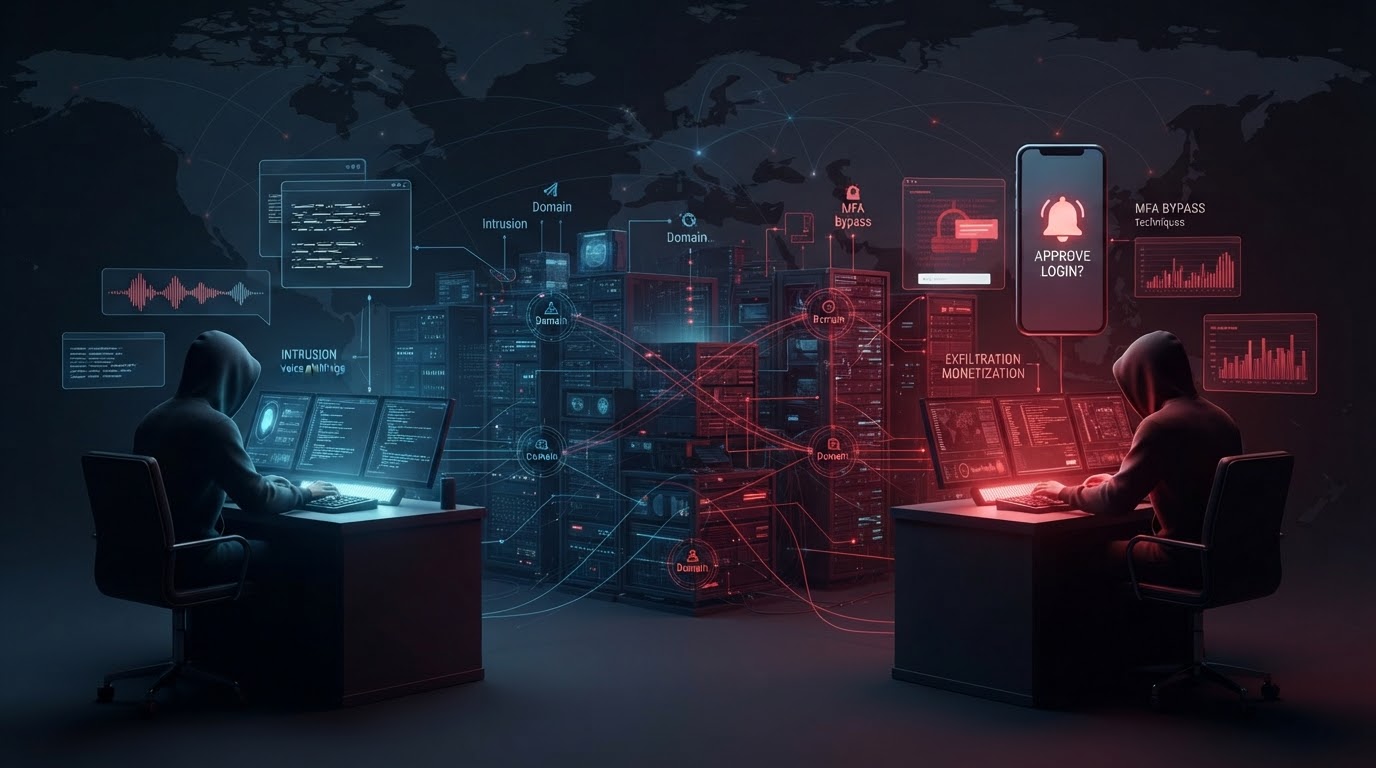
The Inception ransomware group has rejected claims that it is a rebranded ShinyHunters operation, despite security researchers identifying overlapping infrastructure and nearly identical attack techniques between the two cybercrime groups.
In a statement published Tuesday and shared on X, Inception insisted that it operates independently, with different operators, objectives and identity. The group also defended its use of social engineering, arguing that its techniques exploit weaknesses in human security practices rather than copying another criminal operation.
The denial follows an assessment published Monday by Okta Threat Intelligence, which suggested that Inception, a recently emerged data theft and extortion operation, is likely ShinyHunters operating under a different name.
The researchers pointed to similarities in infrastructure and attack methods as evidence supporting the suspected connection.
Inception disputes ShinyHunters attribution
Inception directly addressed the allegations in its statement, declaring: “We would like to address this once, clearly, and only once,” followed by: “We are not ShinyHunters. We were never ShinyHunters. We are Inception.”
The group challenged the significance of infrastructure similarities, arguing that using the same domain registrars, hosting providers and DNS services does not establish an organizational relationship.
According to Inception, these services are widely accessible commercial offerings that do not belong exclusively to particular cybercriminal groups. It described them as “available to anyone who can pay for them,” arguing that infrastructure overlap should not be treated as proof of shared operators.
The gang also defended similarities in its attack techniques, rejecting the suggestion that using methods associated with ShinyHunters makes it a continuation of that operation.
“That is not theft of tradecraft,” the group wrote. “It is acknowledgment of a good idea – the same way every group after LockBit used a leak site, and nobody called them LockBit.”
It further maintained: “Inception is a new group, with new operators, our own objectives, and our own name,” adding, “What we share with the past is plumbing.”
Similar voice phishing techniques raise questions
Okta Threat Intelligence based its assessment partly on the groups’ use of voice phishing, a social engineering technique in which attackers contact employees and manipulate them into compromising their own accounts.
The attacks involve directing targets to phishing pages where they enter their credentials and persuading them to approve multi-factor authentication (MFA) requests.
Inception defended these techniques by describing the human element as the weakest point in organizational security, referring to “a human being holding a phone.”
However, the similarities identified by researchers have kept questions about the group’s origins open. Inception’s denial does not independently establish that its operators are unrelated to ShinyHunters.
ShinyHunters faces growing law enforcement pressure
There are also reasons the suspected connection could be sensitive for the criminal operation.
ShinyHunters has faced significant attention following its September FBI hack and earlier data theft incidents involving millions of people. Among those affected were cancer patients, university students and K-12 students.
At least three individuals suspected of involvement with ShinyHunters were arrested in September and October. However, there has been no confirmation that authorities have dismantled the entire operation.
A previous interview with The Register also highlighted the group’s history of changing identities. A ShinyHunters spokesperson previously said that members of the operation had started as GnosticPlayers before adopting the ShinyHunters name in 2020.
A potential rebranding therefore remains a possibility, although the available information does not establish that Inception and ShinyHunters share operators.
Inception has said it “will not comment further on the ghost of ShinyHunters,” indicating that it does not intend to continue addressing the allegations.
Organizations should focus on defending against the techniques attributed to both groups rather than relying on their disputed identities. Security teams should strengthen employee resistance to voice phishing, enforce phishing-resistant MFA where possible, and train staff never to approve unexpected authentication requests or enter credentials through links supplied during unsolicited calls.