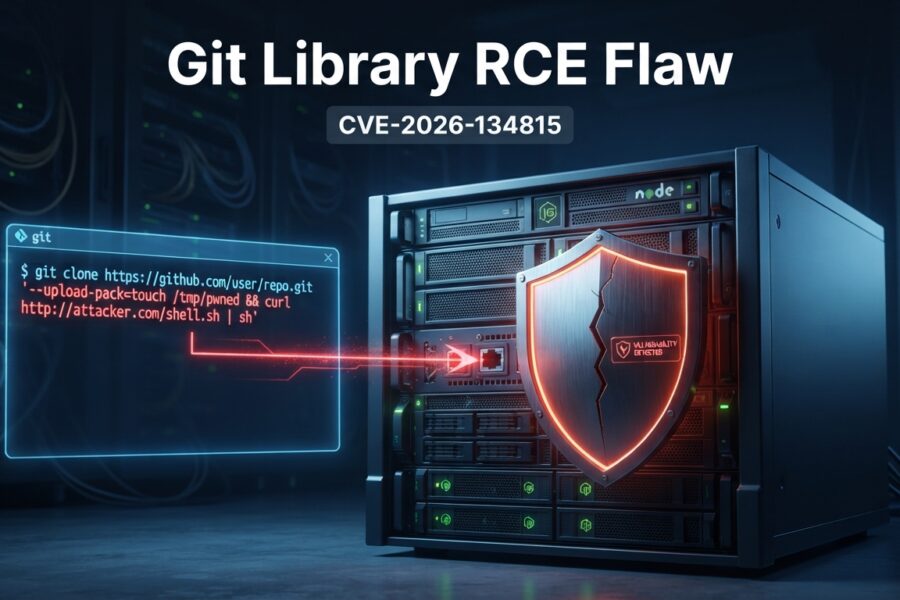
OpenAI and Cisco launched Shirudo on November 23, 2026, an open-source security tool that uses runtime shields to block exploits on running Linux servers without restarting services while permanent patches are being prepared.
The project addresses a common challenge for security teams: protecting vulnerable systems between the disclosure of a security flaw and the deployment of a permanent fix. Updates can take days or weeks to test and roll out, leaving exposed systems vulnerable during the process.
In a demonstration, an OpenAI Codex-generated shield blocked a Java4Shell exploit attempt against Elasticsearch without taking the service offline.
Runtime Shields Target Specific Exploit Activity
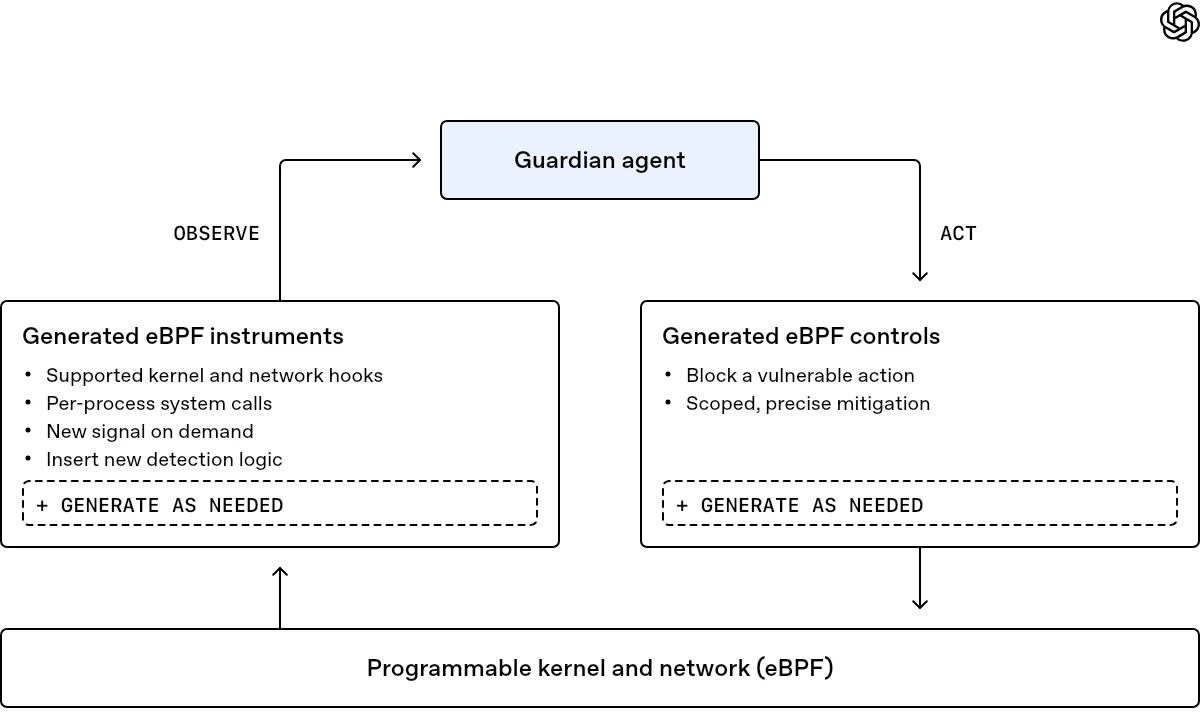
Shirudo builds on Tetragon, Isovalent’s runtime security project, and uses extended Berkeley Packet Filter (eBPF) technology to monitor and control selected Linux kernel activities.
Through these monitoring points, an AI agent can observe process behaviour, including system calls, and generate a security shield designed to block a particular action.
Operators can initially monitor how a proposed shield behaves before enforcing it. This allows teams to evaluate whether a security restriction blocks malicious activity without disrupting legitimate application operations.
The approach is intended to avoid the problems associated with broadly disabling Linux features that both attackers and legitimate applications may depend on.
A similar defensive technique was previously used by Cloudflare when responding to the Copy Fail Linux kernel vulnerability. The company used eBPF to restrict access to the affected kernel feature while preserving access for a service that required it. That response did not involve Shirudo but demonstrated the value of targeted runtime restrictions.
 A similar defensive technique was previously used by Cloudflare when responding to the Copy Fail Linux kernel… Image: Open Ai
Codex Shield Blocks Java4Shell Attempt Against Elasticsearch
The demonstration involved Java4Shell, tracked as CVE-2026-114938, a vulnerability affecting the Base64 decoder in certain unpatched OpenJDK builds running on supported x86-64 processors.
Attacker-controlled input reaching the vulnerable decoder can cause memory corruption and, under certain conditions, potentially enable remote code execution. The vulnerability resides in the Java runtime rather than Elasticsearch itself.
For this demonstration, Codex generated a shield in Java bytecode instead of eBPF because the required security check needed to execute inside the application’s Java runtime.
According to Isovalent, the generated shield introduced an input validation check into the decoder of a running Elasticsearch 9.5.5 process.
Testing showed that the check rejected the malicious test input while Elasticsearch continued operating. This demonstrated that the targeted exploit attempt could be blocked without restarting the service.
However, the demonstration does not eliminate the need to install the appropriate OpenJDK security update. The shield provides an additional protective measure while teams work towards permanent remediation.
Signed Shields Require Specific Hardware and Kernel Support
Shirudo incorporates verification mechanisms intended to help operators establish whether deployed eBPF shields are trusted.
Linux checks that the shield loader carries a trusted signature, while the kernel verifier evaluates the program against its safety requirements. A Trusted Platform Module (TPM) records changes when shields are loaded or removed.
These mechanisms provide evidence that operators can compare against their expected server configurations. However, signature verification and TPM records do not guarantee that a shield will stop every attack or operate without affecting every workload.
The project’s GitHub repository lists Shirudo as a pre-release. Production deployments require a compatible Linux kernel containing Shirudo’s patches and a TPM 2.0.
According to the project’s virtual machine quickstart documentation, loading additional shields after the platform has been configured does not require a restart. However, the initial platform setup starts at boot, meaning the no-restart capability does not apply to the entire installation process.
Security teams should evaluate Shirudo in a test environment, verify shield behaviour before enforcement, and continue applying permanent vendor security updates. The project should currently be treated as an additional runtime protection mechanism rather than a replacement for vulnerability patching.