Japan has taken its Fugaku supercomputer offline after attackers gained unauthorized access to its operating system, potentially exposing personal information and research data belonging to 4,597 users.
The incident involves Japan’s state-backed research institute Riken, which suspended the system while investigating the intrusion and assessing the extent of the potential data exposure.
According to the institute’s preliminary assessment, information stored on the platform could have been accessed during the attack. Riken has not confirmed that any research findings were transferred to external parties.
Japan’s Ministry of Education, Culture, Sports, Science and Technology has instructed the institute to investigate the incident thoroughly and restore the system’s security.
Attackers allegedly used stolen information against external systems
The investigation focuses on the management and operational system used to control and access Fugaku.
A compromise of this infrastructure could expose user records and information stored by researchers, including scientific research files. However, the exact categories of information accessed remain unclear.
Riken also disclosed that information obtained during the intrusion was used in attempts to gain unauthorized access to computer systems outside the institute.
This suggests the attackers’ activities extended beyond Fugaku’s internal environment. However, the institute has not established whether those external intrusion attempts were successful or what systems may have been affected.
Despite the potential exposure, Riken said its investigation has not established that research results were leaked to outside parties.
The institute is working to identify the attackers’ entry point, determine when the intrusion occurred and establish which information was accessed.
Fugaku supports Japan’s critical scientific research
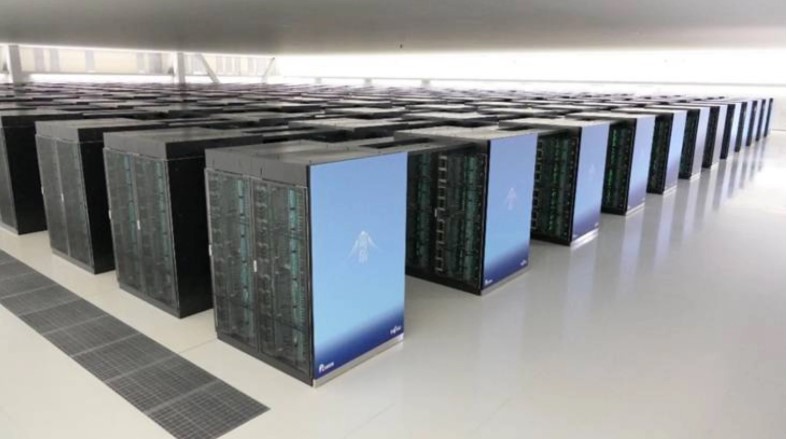
Developed jointly by Riken and Fujitsu, Fugaku began full-scale operations in March 2021, replacing Japan’s previous K supercomputer, which was decommissioned in 2019.
The system is housed at the Riken Center for Computational Science in Kobe, western Japan, where it supports scientific calculations, advanced simulations and industrial technology development.
Fugaku was ranked the world’s fastest supercomputer by computing speed when it entered full service.
Its computing capabilities support research involving large-scale data processing and complex simulations. The platform can also support research related to military technology development.
The unauthorized access therefore raises concerns beyond the potential exposure of individual user information, given the supercomputer’s role in Japan’s scientific and technological research infrastructure.
Riken investigates breach as shutdown continues
Japan’s education and science ministry has directed Riken to investigate the incident and restore the system’s security.
Investigators are examining how the attackers entered the environment, what information they accessed and whether user accounts, research files or external computer systems were affected.
Although the ministry has called for Fugaku to resume operations as quickly as possible, Riken has not announced a restoration date.
The system remains offline while the institute assesses the security risks and works to prevent further unauthorized access.
Organizations using large-scale research computing infrastructure should review access controls, investigate suspicious activity and assess whether user information or research data may have been exposed.