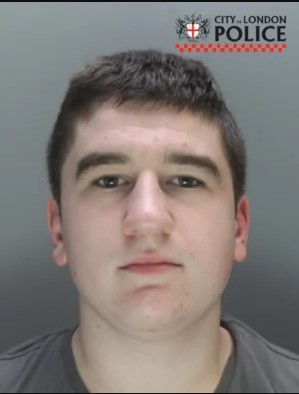
A Michigan pharmacy owner has been sentenced to 82 months in federal prison for a $5.6 million health care fraud scheme and illegally distributing oxycodone to drug traffickers. Ali Naserdean, 32, of Dearborn Heights, will also serve three years of supervised release. He had been detained since October 7 following his arrest for violating bond conditions.
Assistant Attorney General Colin M. McDonald of the Justice Department’s National Fraud Enforcement Division said the scheme harmed both public health programs and taxpayers.
“Fraud against Medicare and Medicaid does not just drain taxpayer-funded programs, it shifts costs onto taxpayers, strains the health care system, and contributes to higher health care costs nationwide,” McDonald said.
He added: “In this case, the defendant’s scheme caused millions of dollars in losses to Medicare and Medicaid and involved the illegal diversion of thousands of oxycodone pills onto our streets, compounding the harm to the public. The Fraud Division will continue to deploy its resources to hold accountable fraudsters and drug dealers like Ali Naserdean.”
Forged prescriptions supported fraudulent claims
According to court documents, Naserdean defrauded Medicare, Medicaid and Blue Cross Blue Shield of Michigan of more than $5.6 million through his work as a pharmacy technician at three metro-Detroit pharmacies and his ownership of one pharmacy.
Between 2019 and 2022, Naserdean and pharmacist Isaiah Okoh submitted claims for prescription drugs that doctors had not ordered and patients had not received.
They used forged prescriptions bearing doctors’ names to make the claims appear legitimate. However, the patients had never consulted the listed physicians, and the medications had not actually been prescribed.
During the same period, Naserdean also sold oxycodone to drug traffickers for cash, without regard to whether the drugs had been prescribed by physicians or dispensed legitimately.
A search warrant executed at his residence uncovered substantial evidence of the fraud and drug distribution activities.
Naserdean pleaded guilty in April 2026 to conspiracy to commit health care fraud and possession with intent to illegally distribute oxycodone.
U.S. Attorney Jerome F. Gorgon, Jr. for the Eastern District of Michigan said the defendant’s conduct extended beyond financial fraud.
“Naserdean lied to the government and cheated the American taxpayer out of millions. And that wasn’t enough,” Gorgon said. “So, he turned around and poisoned the community with drugs.”
Court orders more than $3.6 million in restitution
In addition to the prison sentence, the court ordered the immediate forfeiture of money and property worth approximately $1.2 million.
Naserdean also received a personal money judgment of $5,636,721.89. The court ordered restitution of $3,654,895.65 to the Department of Health and Human Services and $21,428.93 to Blue Cross Blue Shield of Michigan.
Okoh, his co-conspirator, was sentenced to over six years in prison in December 2025.
Deputy Inspector General for Investigations Scott J. Lampert of the Department of Health and Human Services Office of Inspector General said the case demonstrated the consequences of exploiting health care programs and distributing opioids illegally.
“Those who choose to profit from health care fraud and the illegal distribution of opioids should expect to lose their freedom, their livelihood, and the proceeds of their crimes,” Lampert said.
He added: “HHS-OIG and our law enforcement partners will continue to identify, investigate, and pursue individuals who endanger patients, taxpayers, and our communities.”
FBI Special Agent in Charge Jennifer Runyan of the Detroit Field Office also highlighted the combined financial and public safety impact.
“This defendant orchestrated a multimillion-dollar fraud scheme that stole from health care programs while illegally distributing addictive opioids into our communities. His pursuit of personal profit came at the expense of taxpayers, the integrity of our health care system, and public safety,” Runyan said.
“I want to recognize the outstanding work of our FBI Detroit investigators, alongside our federal law enforcement partners, as well as the Dearborn Police Department, whose persistence helped bring this case to sentencing. Anyone who believes they can exploit our health care system while fueling the illegal distribution of dangerous drugs should understand that these crimes carry serious consequences.”
The FBI Detroit Field Office, HHS-OIG and Dearborn Police Department investigated the case. Trial Attorney Jeffrey A. Crapko of the Fraud Division’s Health Care Fraud Section and Assistant U.S. Attorney Paul A. Kuebler prosecuted it.
The Justice Department’s Health Care Fraud Strike Force Program currently operates nine strike forces across federal districts. Since 2007, it has charged more than 6,200 defendants who collectively billed federal health care programs and private insurers more than $45 billion.
Pharmacies and health care providers should verify prescription authenticity, maintain accurate dispensing records and review claims for medications that were never prescribed or supplied. Suspicious opioid distribution and billing activity should be investigated promptly.