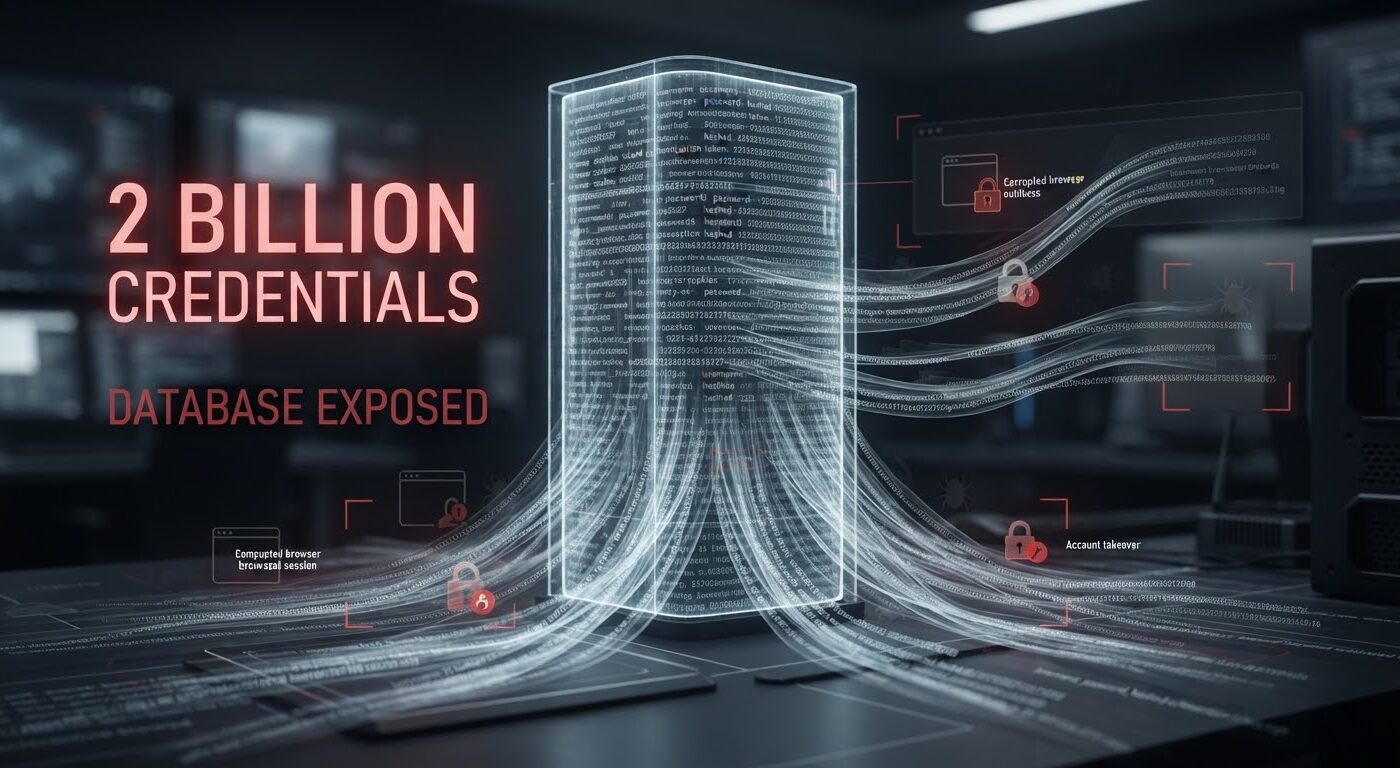
An exposed credential database containing approximately 2 billion records was accessible online without a password or encryption, revealing usernames, passwords, session tokens, cookies and other stolen information.
Cybersecurity researcher Jeremiah Fowler discovered the unsecured database, which he suspects may belong to a criminal marketplace or large-scale credential aggregation operation. The discovery was published by ExpressVPN and subsequently reported by Hackread.com.
The identity of the database owner remains unknown, and the researcher could not establish whether the infrastructure belonged to a criminal data broker, reseller or legitimate research operation.
Two billion records include credentials and stolen device data
Fowler described the discovery as the largest credential collection he had encountered during his career. Its size is at least 13 times greater than another exposure involving 149 million logins that he reported earlier in 2026.
The database contained approximately 8,471 folders holding plaintext credentials and account information. Some records were organized using country codes, including US, UK, FR, DE, ES and MX.
Beyond conventional login information, Fowler identified approximately 400,000 documents believed to have been collected by more advanced infostealer malware.
These files contained browser information, clipboard contents, system details and cryptocurrency-related data.
The collection also included thousands of credentials associated with Tor .onion services, covering private forums, marketplaces and other platforms accessible through the Tor network.
Domain-based searches returned more than 608 million Gmail records, 61.4 million entries associated with .gov domains and nearly 50 million .org records.
Other identified records included 114.2 million associated with Google services and more than 2.2 million combined entries linked to OpenAI and ChatGPT.
However, these figures represent database matches rather than confirmed victims or active accounts. Fowler clarified in his ExpressVPN blog post that records could be duplicated or belong to the same individual across multiple services.
Session tokens increase account takeover risks
The presence of session tokens and browser cookies makes the exposure particularly concerning.
Unlike passwords, session tokens and cookies can contain information used to maintain authenticated sessions. If attackers obtain usable session data, they may gain additional opportunities to access accounts without relying solely on stolen login credentials.
Fowler highlighted this distinction, explaining: “This one goes further, with session tokens, cookies, and device data that give attackers more ways in than a password alone,”
The exposed device information could also provide material for further attacks. Attackers obtaining such collections may have access to information gathered from previously infected devices without needing to compromise those devices again.
Some files contained Telegram branding and advertisements for geographically targeted email lists. However, Fowler could not determine the exact purpose or ownership of the infrastructure.
Hosting provider restricts database access
After Fowler reported the exposure, the hosting provider restricted access to the database several days later.
The incident highlights the amount of information infostealer malware can collect from a compromised device, extending beyond saved passwords to browser sessions, clipboard contents and other sensitive system data.
Organizations should review their exposure to credential theft, enforce multifactor authentication and investigate suspicious account sessions. Users should change passwords associated with potentially exposed accounts, revoke existing sessions where possible and replace compromised authentication tokens.