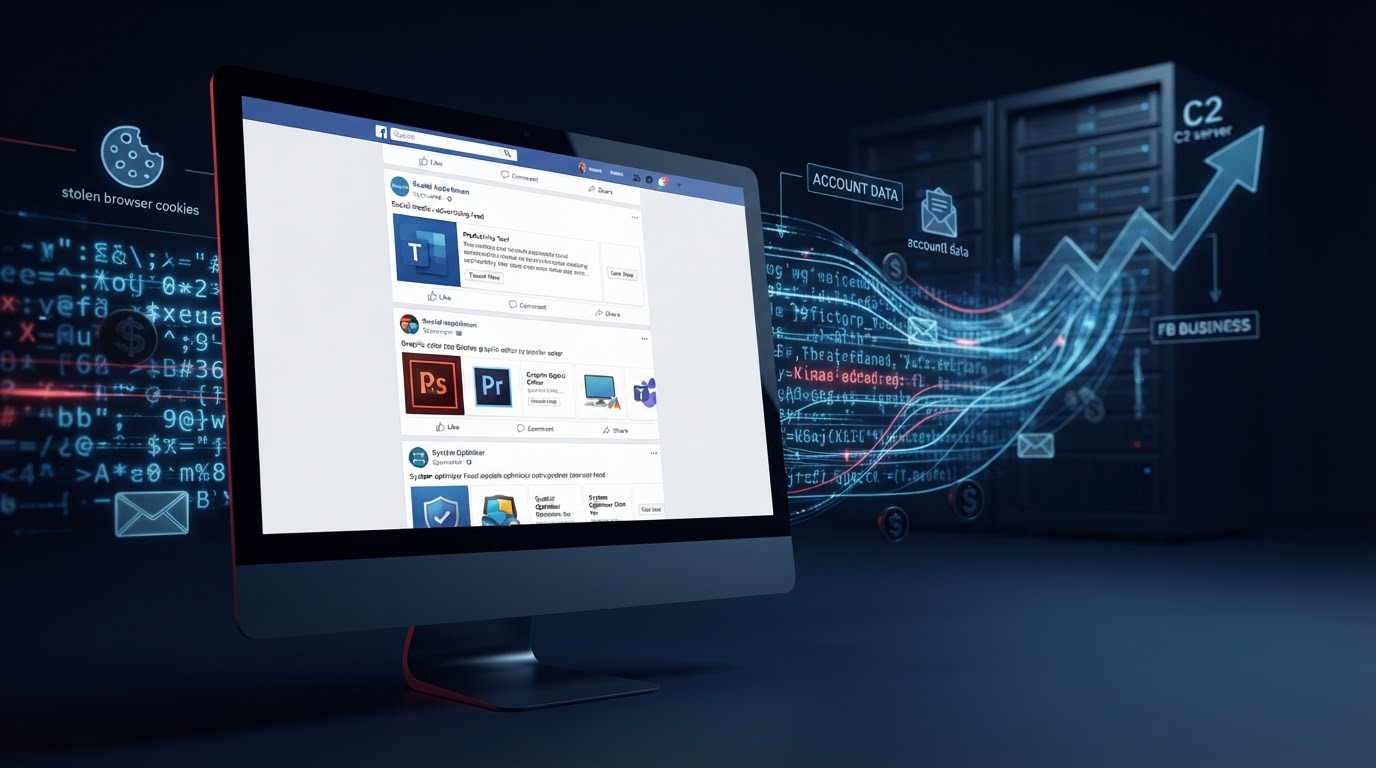
Cybercriminals are exploiting Facebook’s advertising platform to distribute SYS01 infostealer malware, stealing business account credentials, browser sessions and email data while using compromised advertising accounts to finance additional malicious campaigns.
The operation involves thousands of fraudulent advertisements that impersonate popular software and entertainment brands. According to Bitdefender researchers, the campaigns imitate CapCut, Canva, Adobe Photoshop, Office 365, Netflix, Telegram, ExpressVPN and games such as Super Mario Bros Wonder.
Individual advertisements reached tens of thousands of people, primarily men aged 45 and older. Researchers also identified nearly 100 malicious domains involved in malware distribution and command-and-control (C2) communications.
Fake software downloads deliver SYS01
The advertisements typically redirect victims to MediaFire, where they download ZIP archives containing Electron applications.
Inside these archives, attackers hide an obfuscated JavaScript payload, a standalone 7-Zip executable and password-protected components. The malware also checks the victim’s graphics hardware against a predefined GPU list before executing. Systems that do not match the expected hardware specifications are left untouched, helping the operators evade sandbox analysis.
Once the checks pass, the malware extracts a PHP interpreter and IonCube-encoded scripts. A legitimate-looking application runs in the foreground to conceal the malicious activity.
The malware establishes persistence through two Windows Scheduled Tasks named WDNA and WDNA_LG. One executes the PHP stealer every two minutes, while the other restores the malicious components whenever a user logs in.
SYS01 can collect Firefox cookies and authentication tokens, enumerate Facebook pages and advertising accounts, and communicate with remote C2 servers. It can also retrieve additional C2 domains through Telegram bots or Google Pages.
Hijacked advertising accounts finance further attacks
Stolen Facebook Business credentials allow attackers to purchase advertisements using accounts with established advertising histories. This helps their campaigns appear more legitimate and potentially evade Meta’s advertising filters.
The compromised accounts effectively become distribution channels for additional malware. Attackers can also sell stolen accounts through dark web markets.
The campaign has evolved beyond its original distribution methods. On November 26, 2026, Bitdefender disclosed SYS010, which researchers assess is likely the second major version of SYS01.
The newer variant disguises itself as free animated wallpaper applications, including Wallpaper Engine and Lively Wallpapers. Its Wallpaper Engine.exe component is a renamed, signed MeisterTask desktop binary built on Electron 11.0.3.
According to reporting by BleepingComputer, the newer malware abuses enterprise browser management policies to force-install malicious extensions in Chrome, Edge and Firefox.
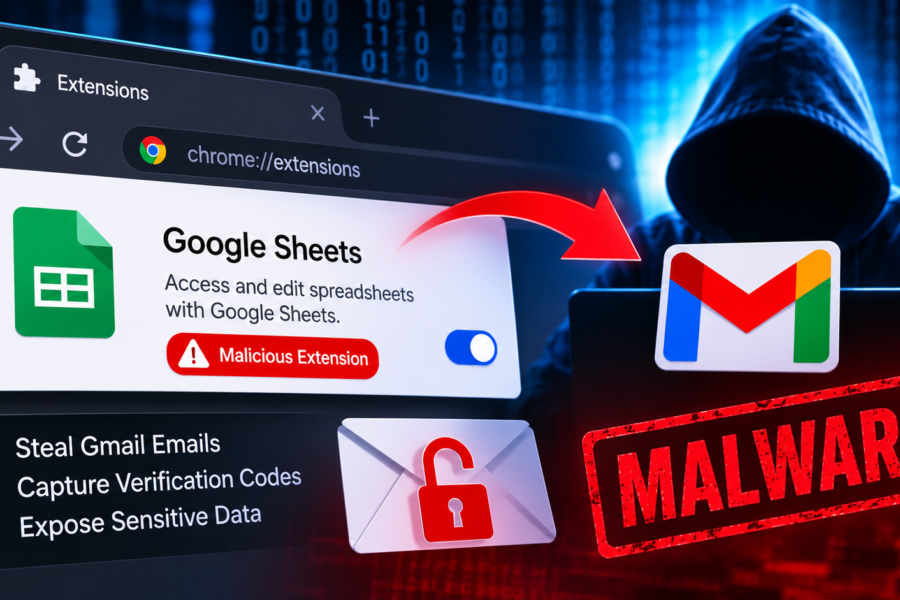
These extensions can steal browser cookies and Meta Business information, access recent Gmail and Outlook messages, and delete emails. Stolen session cookies can also allow attackers to bypass passwords and multi-factor authentication (MFA).
Bitdefender identified Vietnamese-language artifacts and build timestamps consistent with UTC+7, although the operator’s identity remains unknown. Morphisec first documented SYS01stealer in late 2022, when it was distributed through Google advertisements and fake Facebook profiles.
How organisations can detect and prevent infections
Users should avoid downloading software through advertisements on social media, particularly when the advertised application comes from an unfamiliar source. Unexplained administrator permission requests should also be treated with suspicion.
Organisations should review permissions on Meta Business and advertising accounts, remove unnecessary access and investigate unfamiliar advertisements, unexpected advertising charges and changes to payment information.
Security teams should monitor endpoints for suspicious WDNA and WDNA_LG scheduled tasks, unexpected php.exe processes and unfamiliar browser management policies.
Businesses should also review browser extensions, revoke suspicious active sessions and investigate potentially compromised email and advertising accounts.